
PVD vs CVD coating for carbide inserts: what is the practical difference?
Compare PVD and CVD coated carbide inserts by workpiece material, operation, edge geometry and wear pattern. See what to confirm before a trial or RFQ.
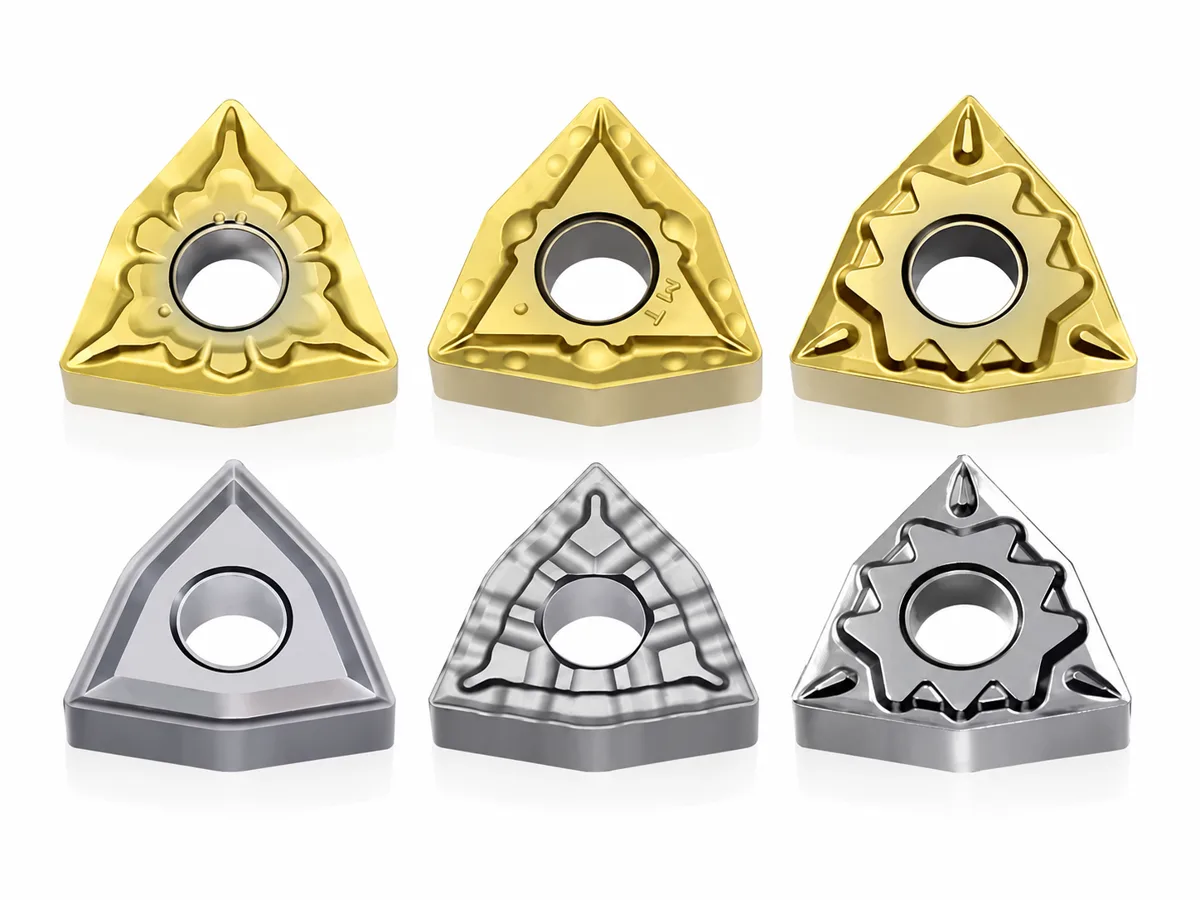
PVD and CVD describe coating processes, not which insert will cut better. PVD-coated grades often allow a sharper edge where cutting forces or adhesion matter. CVD-coated grades often provide a thicker wear and heat barrier for suitable stable cuts. Substrate, edge preparation, chipbreaker and workpiece still determine the trial choice.
What changes when you compare PVD and CVD?
A carbide grade is more than its coating. PVD grades can differ in toughness and edge preparation; CVD grades can target different materials and loads. Read the supplier's grade table alongside the insert geometry and cutting range. An identical ISO body code does not make two coated inserts equivalent. Confirm holder fit, then compare grade and chipbreaker.
PVD commonly permits a thinner coating and sharper edge, potentially reducing cutting forces or adhesion. CVD can provide a thicker coating where heat and abrasive wear matter. These are tendencies, not material rules: manufacturers offer PVD grades for steel and stainless steel, and CVD grades with varied toughness.
Choose a trial by material and cutting conditions
| Job description | What to discuss with the supplier |
|---|---|
| Stainless finishing or material sticking to the edge | A sharp geometry and suitable grade; check chip flow and built-up edge. |
| Stable steel turning with heat or gradual wear | A wear-resistant grade, possibly CVD; compare recommended speed and feed. |
| Interrupted cut, vibration or sudden chipping | Setup stability and a tougher edge; coating alone cannot fix a loose holder. |
For a wider workpiece-material checklist, read our carbide insert grade guide. If the immediate issue is stainless-steel edge failure, use the stainless turning chipping checklist before ordering another coating.
What should a buyer put in the RFQ?
- Current insert: full designation, grade, chipbreaker, holder code and photos of the label and worn edge.
- Workpiece: material specification, hardness if known and surface condition.
- Operation: roughing or finishing, continuous or interrupted cut and required finish.
- Conditions: speed, feed, depth of cut, coolant and chip form.
- Purchase scope: trial and repeat quantities; exact replacement or proposed alternative.
How can you compare candidates fairly?
Ask for the full proposed code and intended application, then test candidates under recorded, comparable conditions. Inspect the same wear location after a similar cutting interval; note finish, chip control and edge damage. Immediate chipping calls for a clamping and load check. Gradual wear calls for a grade and cutting-data check. Change one variable at a time.
Frequently asked questions
Is PVD always better for stainless steel?
No. It can be a starting direction, but grade, geometry, conditions and failure pattern matter more.
Is CVD always tougher because its coating is thicker?
No. Thickness does not describe substrate toughness or chipping resistance. Compare the complete grade and application range.
Can I keep the same holder when changing coating?
Often yes, but the full insert geometry and size must match the holder seat. Confirm the complete code.
Discuss a coated-insert trial
Browse our turning insert range, then send the current code, material and wear photos so we can discuss a suitable comparison. Ask about PVD or CVD inserts on WhatsApp, or use the quote form. Review the draft and press Send in WhatsApp to complete the inquiry.