
Carbide Insert Grades for Steel, Stainless Steel and Cast Iron: A Buyer’s Starting Checklist
Choose a turning insert starting point by material, cut and current tool code.
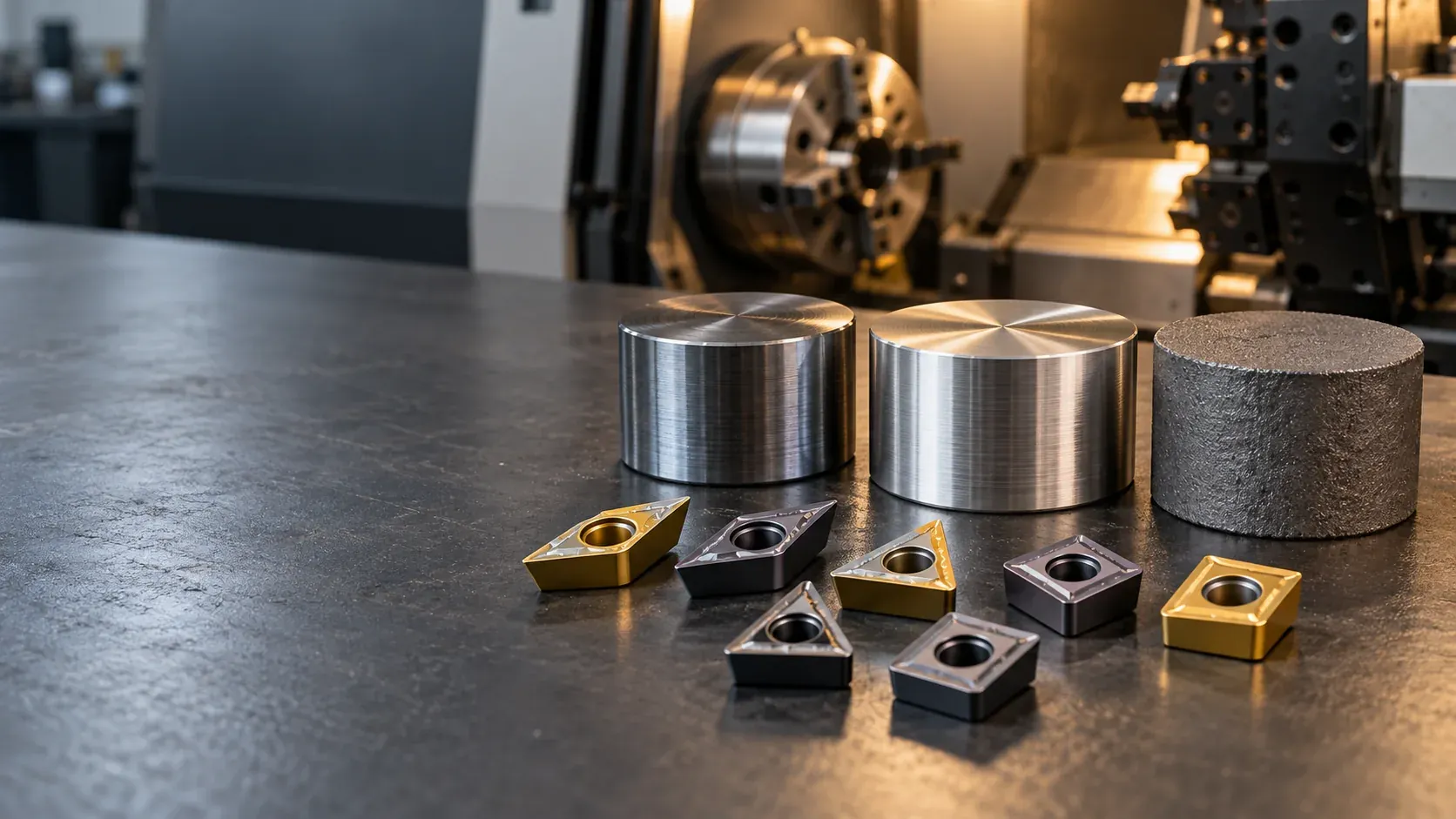
Two turning inserts can share the same shape and size yet behave differently in the cut. The grade, coating and chipbreaker need to suit the workpiece and the job. If you are buying replacements for several machines, the full insert code is a better starting point than “carbide insert for steel.”
Start with the material, then describe the cut
Cutting-tool catalogs commonly group workpieces as ISO P for steel, ISO M for stainless steel and ISO K for cast iron. These groups narrow the choice, but they do not identify one universal grade. Within each group, tool makers offer different geometries and grades for light finishing, medium turning and heavier cuts. For example, a catalog can list the same insert size with different chipbreakers and different preferred material groups. Sandvik Coromant turning-insert catalog
Tell the supplier whether the cut is continuous or interrupted, roughing or finishing, and whether your machine and workholding are stable. A thin wall, long overhang or interrupted surface can change the preferred edge strength even when the material name is unchanged. If your main problem is built-up edge, poor chip control, edge chipping or rapid wear, describe that symptom rather than asking for a “better grade” without context.
What changes between steel, stainless steel and cast iron?
For steel, give the steel grade if known, plus the desired balance of tool life, chip control and surface finish. A buyer replacing a productive insert should include its complete manufacturer code and current cutting conditions. That lets the supplier look for a like-for-like option before proposing a change.
For stainless steel, specify the alloy or at least whether it is an austenitic or another stainless family. Say whether chips are stringy, the edge wears quickly or the insert chips. Geometry and grade both matter; a grade label by itself does not settle the choice. If stainless turning is your immediate issue, see Why do carbide inserts chip when turning stainless steel?.
For cast iron, identify the grade and whether the surface has scale, casting skin or interruptions. A finish cut on a clean surface is a different purchasing question from roughing an uneven casting. Ask the supplier to distinguish the proposed grade and edge geometry for the actual operation.
| If you are buying for… | Tell the supplier first | Avoid this shortcut |
|---|---|---|
| Steel turning | Steel grade, roughing or finishing, current insert code | Selecting by the word “steel” alone |
| Stainless turning | Alloy, chip behavior, edge-wear or chipping problem | Assuming the same geometry works for every stainless job |
| Cast-iron turning | Cast-iron grade, casting skin or interruptions | Comparing only insert price without the cut condition |
Use the insert code to avoid a costly mismatch
Record the full code, not just a shape such as CNMG or WNMG. The size, thickness, nose radius, chipbreaker and grade suffix all affect the replacement request. Confirm that the candidate insert fits the existing holder and that the edge geometry suits the planned depth of cut and feed. If a buyer has only a photo, include a clear picture of the insert top, side and package label, plus the holder marking. See How to buy replacement carbide inserts by ISO code for a code-first approach.
A useful RFQ can be short
Send these five items:
- Current insert and holder codes, or clear photos if the markings are missing.
- Workpiece material and hardness if known.
- Roughing or finishing, continuous or interrupted cut, and the current problem.
- Depth of cut, feed and speed if available.
- Trial quantity and expected repeat quantity.
For a new job, it is reasonable to ask for a small comparison trial before changing a repeat-order specification. Keep the accepted insert code and cutting conditions together so the next order can be checked against the trial result.
For example: “We use CNMG 120408 inserts to turn 304 stainless steel. The edge chips during an interrupted roughing cut. The current holder code is [code]. We need a trial quantity of [quantity] and can send the cutting conditions.” This gives the supplier a problem to investigate without pretending that the material name alone determines the answer.
Need a grade or replacement check? Review our turning insert range and send your insert code, material and current problem on WhatsApp. Review the draft and press Send in WhatsApp to complete the inquiry.
Need a compatible insert or holder?
Send your current code, material, application and quantity for a practical check.
For all six ISO groups — including aluminium (N), heat-resistant alloys (S) and hardened steel (H) — see the full workpiece material groups guide, and confirm dimensions in the insert size chart.