
How can I buy replacement carbide inserts by ISO code?
Buying replacement carbide inserts by ISO code? Check the complete marking, chipbreaker, grade and holder fit. See what to send for an accurate quote or trial.
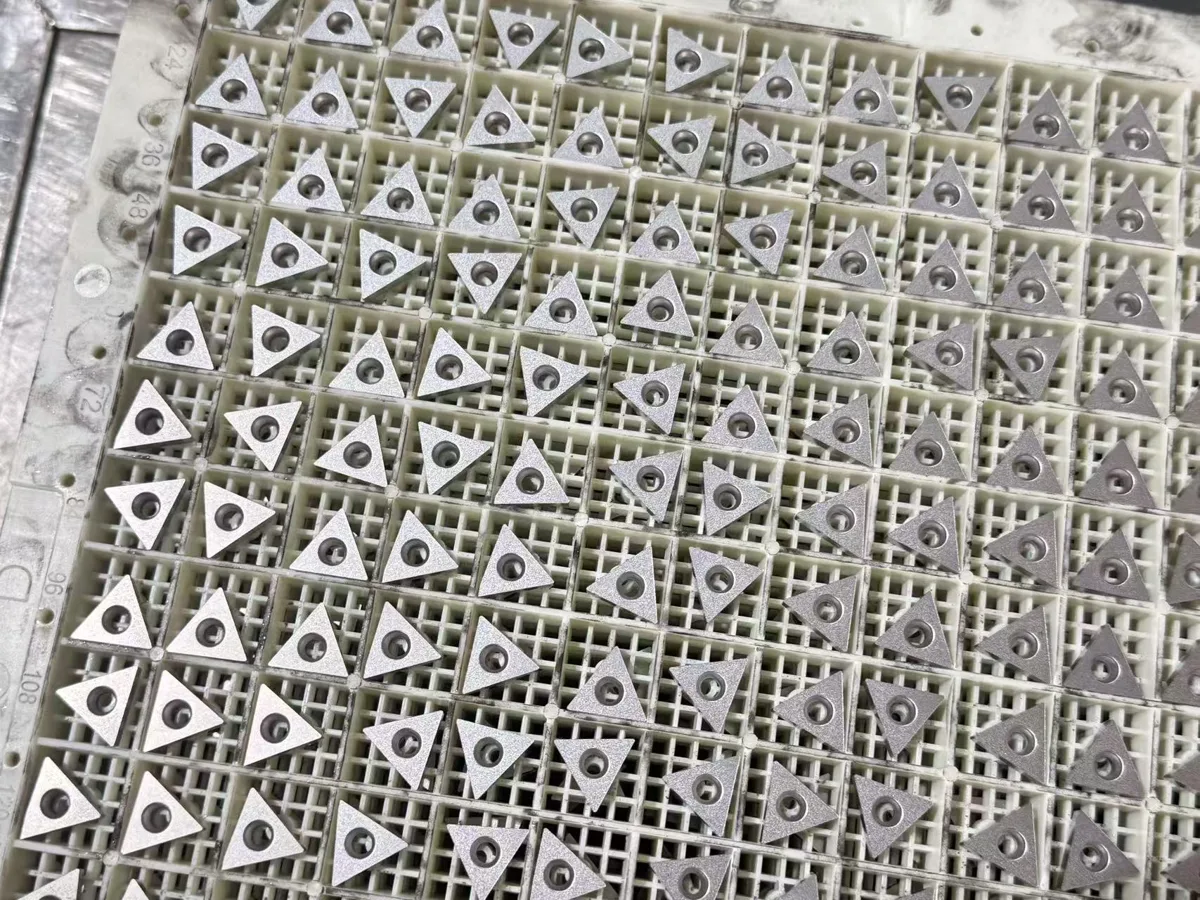
Send the complete insert marking and the holder or cutter-body code, not just a shape such as CNMG or APKT. An ISO designation helps identify key insert features and dimensions, but it does not standardize the carbide grade or cutting geometry. A replacement still needs a seat-fit check and an application check before it can be treated as equivalent.
What does the insert code tell you?
For an indexable insert, the standardized part of the designation describes features such as shape, clearance, tolerance, size and, where applicable, thickness or corner radius. It is useful for narrowing a search, but the characters after the base designation may identify a maker's chipbreaker or edge preparation. The grade can be printed separately on the packet. For example, a supplier may list an insert designation, a chipbreaker suffix and a grade as distinct fields. Photograph the entire label if you are unsure where one field ends and another begins.
Do not order from the first four letters alone. A turning insert must sit correctly in its holder; a milling insert must match the cutter pocket and clamping system. If a current setup works, the holder or cutter-body marking is the quickest way to check that fit. See our turning inserts and milling inserts for the product families we can discuss.
Replacement insert RFQ checklist
| Send this | What it helps confirm |
|---|---|
| Complete insert and grade markings | Base dimensions, chipbreaker or geometry suffix, coating and grade direction. |
| Holder or cutter-body code | Insert seat, clamping method and practical compatibility. |
| Photos of the insert and packet | Unclear characters, top and side geometry, and the actual edge used. |
| Workpiece and operation | Material grade, roughing or finishing, continuous or interrupted cut. |
| Quantity and current result | Trial or repeat-order scope, plus wear, chipping, chip control or finish issues. |
When is an alternative a reasonable trial?
If the exact branded grade is unavailable, request a proposed alternative with its full code, grade and chipbreaker. Ask the supplier to state which dimensions and seat features have been checked, and which cutting conditions the proposed edge is intended for. Physical fit alone does not prove that chip control, finish or tool life will match your current insert. Use a small trial under recorded conditions before approving a production substitution, especially for tight-tolerance or interrupted work.
For mixed model lists, separate the items you need as exact replacements from those where a functional alternative is acceptable. If the grade is the main uncertainty, our steel, stainless and cast-iron grade checklist shows which application details help narrow the choice.
Frequently asked questions
Is an ISO code enough to guarantee interchangeability?
No. The standardized designation is a starting point. Confirm the full insert dimensions, clamping and holder fit, then review the supplier-specific chipbreaker, edge and grade.
What if the insert marking is worn off?
Send the holder or cutter-body code, packet label if available, and clear top and side photos beside a ruler. State the workpiece and operation; do not guess a code from a single photo.
Should I change grades while replacing a failed insert?
First describe how the old edge failed. Gradual flank wear, chipped corners and built-up material point to different checks. A new grade may help, but the holder, chipbreaker, cutting data and coolant may also need review.
Ask for a replacement check
Send your complete codes, material, quantity and photos. We can discuss a matching direction and any details that still need confirmation before a trial. Start a replacement-insert inquiry on WhatsApp, or use the quote form. Review the draft and press Send in WhatsApp to complete the inquiry.