
16ER vs 16IR Threading Inserts: What to Check Before Ordering
Check external or internal threading, holder fit, pitch and profile before ordering.
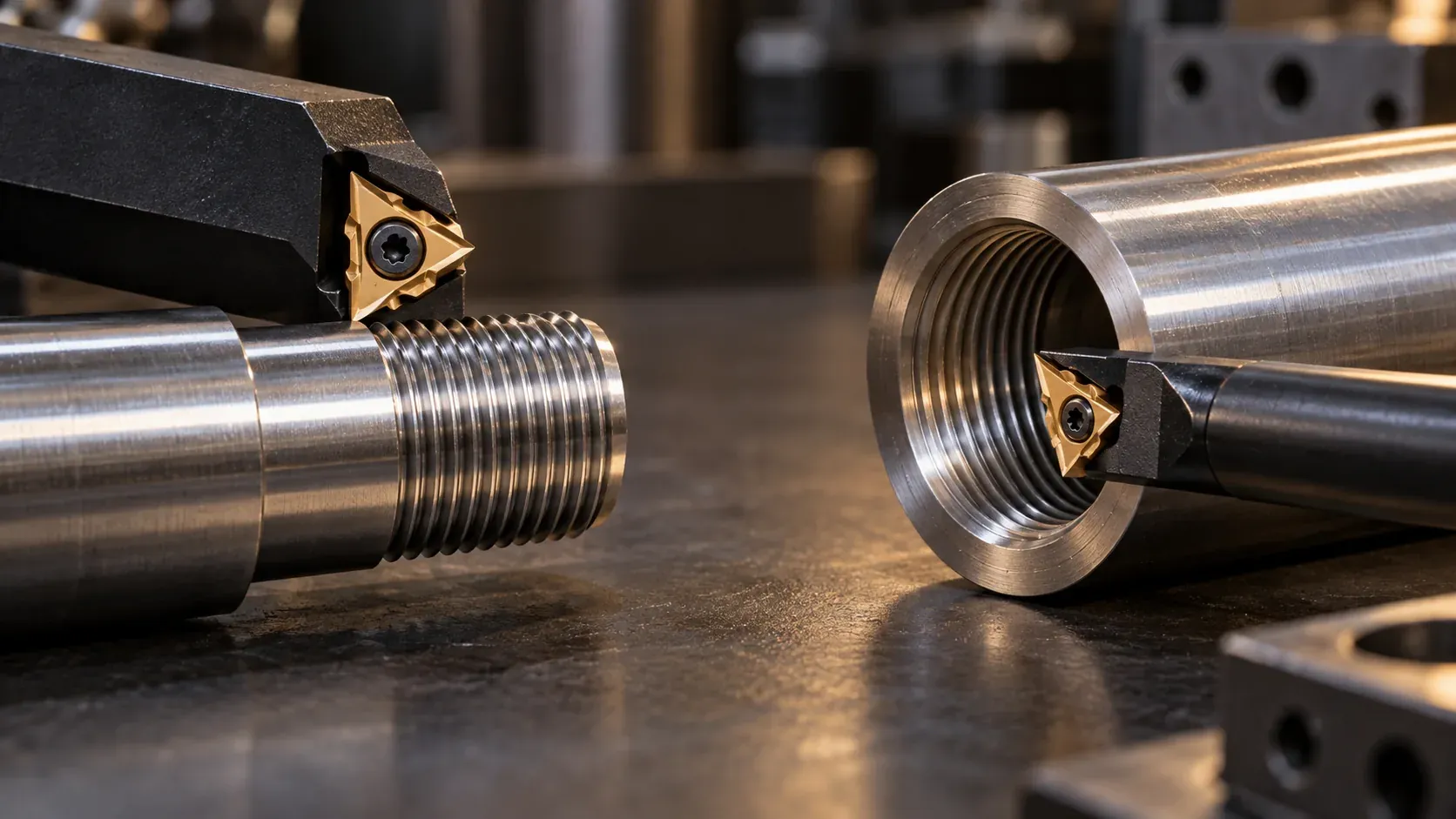
An insert marked 16ER and one marked 16IR may look similar in a product photo, but they are intended for different setups. In a common laydown-threading code convention, 16 is the insert size, E means external, I means internal, and R means right-hand insert. Do not assume that the same size makes the two inserts interchangeable. Check the maker's full code and matching holder before ordering. ISCAR threading handbook
External or internal thread?
Start with the part: are you cutting a thread on the outside of a shaft or inside a bore? Then check the holder or boring bar you already use. An external insert must match the external holder's seat, clamping method and orientation; an internal insert must match the internal bar. The insert code alone cannot confirm compatibility across every holder system or brand.
The complete marking also matters. “16ER” or “16IR” identifies only the start of a longer code. Later characters can describe the thread profile, pitch and manufacturer-specific geometry or grade. Photograph the entire code on the old insert package and the holder marking before asking for a replacement.
Pitch and profile come before grade
Specify whether the job calls for a metric, UN, Whitworth, NPT or another thread form, then give the exact pitch or threads per inch. Do not ask only for a “60-degree insert” if the finished thread must meet a particular standard. A full-profile insert may be made for a specific pitch, while partial-profile options cover a range but leave more of the final thread form dependent on preparation and process. The correct choice depends on the drawing and production goal. Sandvik Coromant insert and shim guide
Also confirm right-hand or left-hand thread, the machining direction and whether the operation is on a CNC lathe or another machine. For internal threading, the bore diameter and available clearance are important. If a supplier recommends a different insert or shim, ask them to identify exactly what changes in the holder setup. Pitch and diameter influence the thread helix angle, so the existing shim may need to be checked rather than assumed suitable. Sandvik Coromant thread-turning tips
Send a replacement request the supplier can answer
Include:
- Full old insert code and a photo of its top and side.
- Full holder or boring-bar code and a photo of the insert seat.
- External or internal thread; right-hand or left-hand.
- Thread standard and exact pitch or TPI, ideally from the drawing.
- Workpiece material, current issue and quantity needed for a trial or repeat order.
If the old insert worked well, say so. A supplier can then aim for a like-for-like fit before suggesting a change in grade or geometry. If the old insert failed, explain whether the problem was poor thread finish, rapid wear, chipping, burrs or lack of clearance.
For example: “We need to replace a 16IR insert for an internal metric thread at [pitch] mm in [material]. Our boring bar code is [code], and the thread is right-hand. Please confirm the insert profile and holder compatibility before quoting [quantity].” If you have the old insert package or drawing, attach it to the conversation.
Need a 16ER or 16IR replacement check? See our threading insert range and send the holder code and thread specification on WhatsApp. Review the draft and press Send in WhatsApp to complete the inquiry.
Need a compatible insert or holder?
Send your current code, material, application and quantity for a practical check.