
CNMG vs WNMG Inserts: 4 vs 6 Usable Edges, Holder Fit & Cost per Edge
CNMG and WNMG are not interchangeable names for the same turning insert. Start with the holder, insert shape, operation and material before selecting a replacement.
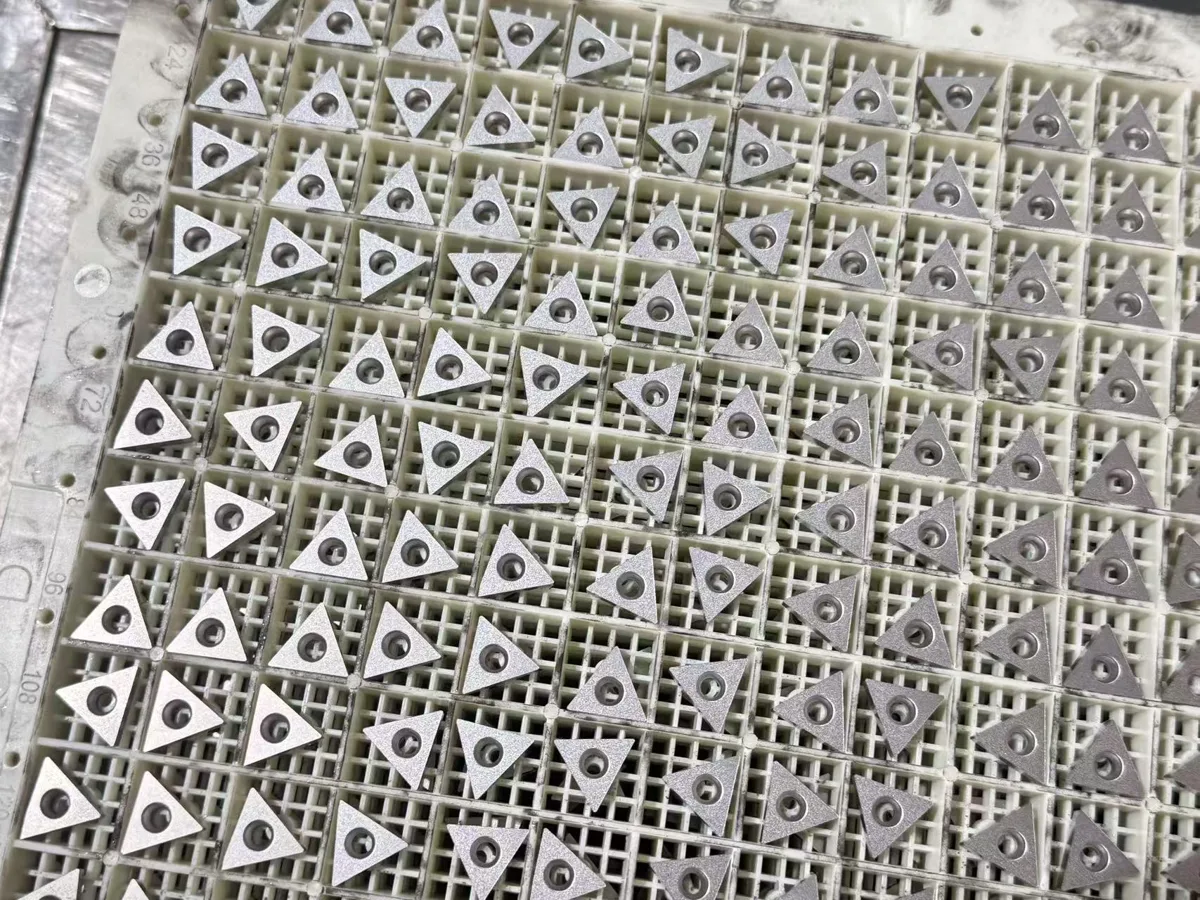
CNMG and WNMG use different insert shapes and holder systems. The right choice depends first on what the holder accepts, then on the workpiece material, operation, stability, chip control and edge-load requirement. Do not select only from a search term or shape photo.
| Feature | CNMG | WNMG |
|---|---|---|
| Shape | 80° diamond (rhombic) | Trigon |
| Nose angle | 80° | 80° |
| Usable 80° edges in standard holders | 4 | 6 |
| Holder examples | PCLN-type holders | MWLN-type holders |
| Selection consideration | Commonly used for roughing; stability depends on holder support, grade, chipbreaker and cutting conditions. | Six usable corners can reduce cost per edge when insert price and tool life are comparable. |
These counts refer to the usable 80° corners of standard double-sided CNMG and WNMG inserts in compatible holders. Match the complete insert and holder specifications; family names alone do not establish compatibility. Lower cost per edge is not guaranteed by corner count alone.
Why CNMG vs WNMG is not a simple “which is better” question
Both families are common in external turning, but their geometry and compatible holder systems are different. Buyers often use the comparison when they need a replacement insert, want more usable corners, or are trying to solve chipping or finish issues. The answer changes with the holder, the approaching angle, whether the cut is continuous or interrupted, and the required balance between edge support and access to the workpiece profile.
Start with compatibility. A correct insert that does not match the holder seat cannot be evaluated as a cutting solution. Once the holder is confirmed, the grade, chipbreaker and edge direction can be selected around the actual job.
Step 1: Confirm the holder before comparing insert shapes
CNMG and WNMG should be quoted with the holder model whenever possible. The holder controls how the insert is seated, clamped and presented to the workpiece. A buyer who has only a partial insert code should send a photo of the holder and the empty insert seat before ordering.
| Check | Why it matters | What to send |
|---|---|---|
| Full insert code | Identifies size, thickness, corner radius and chipbreaker direction. | Box label or clear insert photos. |
| Holder model | Confirms the insert shape and clamping system the tool accepts. | Marking on holder or full tool photo. |
| Current edge condition | Shows whether the issue is chipping, wear, built-up edge or breakage. | Close photo of the used corner. |
| Operation | Determines required edge strength, chip control and finish direction. | Roughing, finishing, facing, profiling or interrupted cut. |
Step 2: Use shape and corner access as selection inputs
Insert shape affects the available corners, entering direction and access to profiles. That does not make one family universally better. A stable roughing operation with a holder designed for CNMG may prioritize the robust 80-degree insert shape and a suitable chipbreaker. A compatible WNMG holder may be selected where its geometry and usable-corner arrangement fit the component and process plan.
Check the actual component drawing or finished profile before changing families. If the job needs to approach a shoulder, blend a profile or reach a particular feature, the holder and insert geometry must support that path without forcing the cutting edge into an unstable position.
Step 3: Match edge strength and chip control to the operation
The same CNMG or WNMG family can be supplied with different grades, coatings and chipbreakers. A light finishing pass, a continuous steel turn, a stainless-steel application and an interrupted cast surface do not place the same demand on the cutting edge.
- For a stable finish, check whether the geometry cuts cleanly at the intended load and gives manageable chips.
- For roughing or interruption, check edge support, clamping stability and whether the workpiece has scale, holes or uneven allowance.
- For stainless steel, check heat, work-hardening and built-up edge rather than changing only the insert shape.
- For cast iron or abrasive surfaces, check the grade direction, edge condition and workholding stability.
Do not change holder, insert family, grade and cutting conditions all at once. A controlled change gives a clearer answer about what caused the original issue.
Step 4: Separate a replacement quote from a process recommendation
A direct replacement quote needs the exact current code and holder. A process recommendation needs more: workpiece material, operation, approximate cutting conditions and the current problem. Separating these two requests makes the reply faster and avoids using a generic answer for a specific machining issue.
Illustrative application example
Suppose a machine shop is comparing CNMG and WNMG to review insert cost per usable edge. An insert photo alone leaves the holder and application unclear. A useful request would include the holder marking, an insert-seat photo, the workpiece material and the operation.
If the job includes a shoulder or interrupted cut, include those details with the request. Check holder compatibility and agree a trial candidate under recorded conditions before comparing order options.
What to send for a CNMG or WNMG quote
- Full CNMG or WNMG code, including grade or coating if known.
- Holder model and photos of the insert seat.
- Workpiece material and operation.
- Whether the cut is continuous, interrupted, roughing or finishing.
- Photo of any chipped or worn corner.
- Quantity, packing requirement and whether you need neutral or private-label packaging.
FAQ
Can CNMG replace WNMG in the same holder?
No. Confirm the holder system and seat before changing insert shape. Similar external dimensions do not prove compatibility.
Which insert has more usable corners?
In standard holders, a WNMG insert gives you 6 usable 80° corners (3 per side, double-sided), while a CNMG gives 4 usable 80° corners in its standard holder. That is why WNMG is often chosen for cost per edge — but only if your holder system accepts the WNMG shape. Corner count alone should not override holder fit, profile access and edge stability.
Can you match an insert from a photo?
A photo helps, especially together with the holder model and current code. For a reliable replacement direction, show the top, side, bottom and seat where possible.
Summary
CNMG vs WNMG is a compatibility and application decision. Confirm the holder first, then match the insert geometry, grade and chipbreaker to the material and operation. For product details, CNMG120408 product page, see our turning inserts page, CNMG guide and WNMG guide. Send your code, holder photo and quantity through the RFQ page for model matching.